Llewellyn's 2026/2027 tarot catalog is here, and I have feelings about it

The Llewellyn catalog dropped last week, and my phone has been buzzing nonstop. Three different group chats, a text from my friend Diego who doesn't even read tarot but likes pretty pictures, and an email from a collector I met at a convention in 2019 who apparently still has my address. All of them asking the same thing: what looks good?
I'll be honest: I didn't read the whole thing cover to cover. I skimmed. I circled. I dog-eared. I spilled coffee on page 37 and now the Sun card in some deck I can't remember is permanently stained. It feels appropriate, somehow.
Because here's the thing about the Llewellyn tarot catalog 2026 — it's not just a list of products. It's a snapshot of where tarot is heading. And this year, the direction is interesting.
What's New in the Llewellyn Tarot Catalog for 2026?
Let's start with the obvious. The new tarot decks 2026 lineup is bigger than last year. Like, noticeably bigger. Llewellyn has been ramping up their release schedule for a few years now, but this catalog feels like they finally said "fuck it" and decided to release everything they've been cooking.
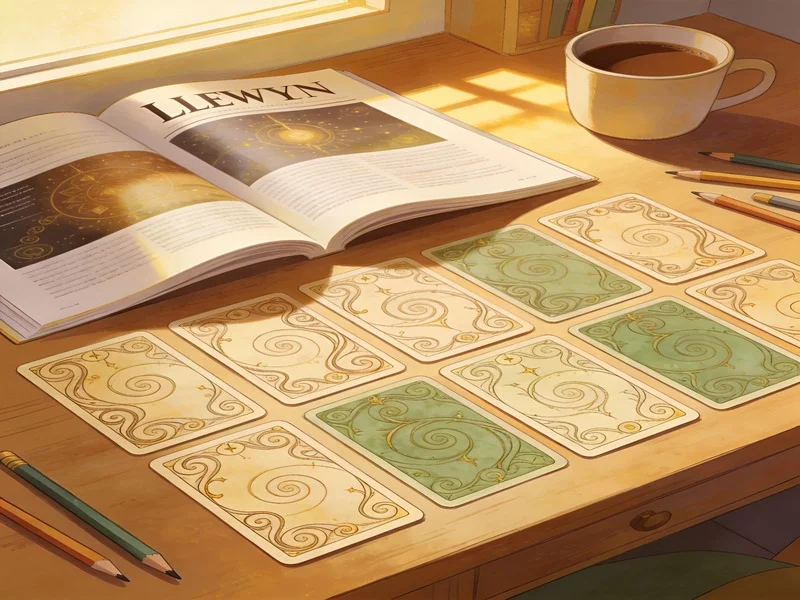
There's a deck called Tarot of the Sacred Spiral that keeps showing up in my peripheral vision. The card art is all hand-drawn, organic lines, with this muted earth palette that shouldn't work but absolutely does. I'm a sucker for decks that don't feel like they were designed in a digital vacuum. You can see the artist's pencil strokes. The Moon card has this quality of light that I keep coming back to.
The Hollow Valley Tarot is another one. Overcast skies, lonely landscapes, figures that are half-formed and somehow more real for it. It's melancholy in a way that speaks to the part of me that reads at 2am when I can't sleep. Not every deck needs to be sunshine. Some readings need fog.
And then there's the Copper Garden Tarot, which is probably the one I'm most torn about. The imagery is stunning — botanical illustrations that look like they belong in a Victorian greenhouse. But I'm not sure how it reads in practice. Pretty decks sometimes sacrifice clarity for aesthetics. I'll hold my judgment until I have the physical cards in my hands.
One trend I'm noticing across the whole catalog: inclusive imagery is no longer a selling point, it's just the baseline. Several decades ago, you'd see a token queer card or a deck with one person of color in the background. That's gone. The card art in the 2026 catalog shows all kinds of bodies, all kinds of relationships, all kinds of ways of being human. Not as a theme, just as the natural state of things. I can't tell you how much this matters.
There's also a shift toward minimalist art. Not the stark, white-background minimalism you see in a lot of indie decks. More like... essentialist. The artists are stripping away everything that doesn't carry meaning. A Three of Cups that's just three circles overlapping, but done with such precision that you feel the geometry of connection. I'm here for it.
Okay, but the one thing I want to argue about: everyone's losing their minds over the deck with gold foil edges, and I just don't care. Gold edges are not content. They're packaging. Give me a deck with soul before you give me one with metallic shine. You can't shuffle a gimmick.
Spotlight on the 2027 Tarot Releases: Early Sneak Peeks
Here's where things get interesting. Llewellyn 2027 tarot releases are already creeping into the catalog like mushrooms after rain. Most publishers would keep their next year's launches under wraps, but Llewellyn knows we're impatient. They tease.

The big one is the 2027 edition of Llewellyn's Witches' Tarot. If you've been reading for a while, you know this deck. It's been around since 2003, went through a full re-creation in 2016, and now they're doing another pass. I got a chance to chat with the artist, and there's something she said that stuck with me.
"I want people to feel the weight of the cards in their hands and know that these are tools, not just art."
That's the thing, isn't it? A tarot deck is both. I've had clients frame cards after particularly moving readings. I've also used the same deck for ten years and the edges are soft from shuffling. The 2027 edition is supposed to have updated imagery that honors the original's witchy, green-world energy while making it more accessible to a wider range of readers. I'm curious how they'll pull that off.
There's also a deck that's still so under wraps I almost didn't mention it. But the catalog has a one-line teaser: "A deck for the harvest." That's it. No name. No art. No release date beyond "fall 2027." And the internet has already gone feral.
I have opinions. Not about the deck itself, but about the archetype. Harvest isn't just about abundance in the material sense. It's about reaping what you've sown, which means it's also about being honest with yourself about what you planted. Every harvest card in every deck I own hits differently depending on where I am in my own cycle.
Here's another Llewellyn 2027 tarot deck list item that's been popping up in my TikTok feed: a deck based on the agricultural seasons. Imbolc, Ostara, Beltane, Litha, Lammas, Mabon, Samhain, Yule — eight suits, one for each sabbat. I'm skeptical. How do you map the traditional 78 cards onto eight suits? That's 9.75 cards per suit, which doesn't work with the math. And that's not even getting into how you handle the major arcana.
I mentioned this to a friend, and she said, "Maybe it's a deck for people who don't read with the traditional structure."
And I said, "Then it's not tarot, it's an oracle deck with extra steps."
We argued about it for twenty minutes. I stand by my position. Tarot's structure — the 78 cards, the two arcs, the suits, the court cards — is what gives it its power. If you throw out the structure, you're making something new. Which is fine. But it's not tarot.
Say what you want about the complete tarot card guide I keep on my shelf, but the tradition matters. The structure is the container. Without it, the magic just leaks out.
The deck that might actually convert me, though? There's a Lammas-themed deck in the 2027 lineup that just... works. Lammas is the first harvest, the grain harvest, the one that feels both abundant and elegiac. You're gathering the wheat, but you know the days are already getting shorter. The artist for this one gets that. The cards are warm and golden and somehow bittersweet.
I want to be mad about how good these early looks are. I really do. But I can't.
How to Pre-Order and What's Already Sold Out
Okay, let's talk logistics. Because the tarot deck previews 2026 are one thing, but actually getting your hands on these decks is another game entirely.

Here's the thing about Llewellyn releases: they don't do many exclusive editions. Most of what they put out goes to general retail — bookstores, online shops, your local metaphysical store that smells like sage and old paper. That's good news if you hate FOMO.
But there are exceptions. The gilded-edge collector's edition of the Sacred Spiral Tarot? Already sold out. Pre-order opened at 9am on a Tuesday. Gone by 9:17. I know because I tried to get one and the checkout button kept spinning.
The Copper Garden Tarot is already generating waiting lists at independent shops, mostly because the artist has a huge following on social media and posted a single teaser video that got half a million views. If you want that one, don't wait. Put your pre-order in now.
So, best tarot decks to preorder 2026? Here's my short list:
- Tarot of the Sacred Spiral — the standard edition is beautiful. Don't spend three times retail on the collector's edition unless you genuinely need gold edges. I promise the card stock is the same.
- Hollow Valley Tarot — if you like decks that make you feel something. It's not a deck for beginners. It's a deck for people who are willing to get uncomfortable.
- Copper Garden Tarot — if you want a deck that will absolutely make your clients say "oh, that's gorgeous" before they even start reading.
- The Lammas deck — not officially on the 2026 release schedule, but I'm putting it here anyway. Watch the Llewellyn site.
Pre-order windows for Llewellyn decks open about six months before release. If you see something in the catalog that speaks to you, don't use the "I'll wait until it's out" strategy. These decks are not plants. They don't get bigger if you wait. They just sell out.
Also, and I can't stress this enough: check the card stock. Llewellyn has gotten better about this in recent years. Some of their older decks were so flimsy they'd warp after a week of casual shuffling. The newer releases use heavier stock, but not uniformly. The catalog lists it. Read the specifications.
The Hidden Gems: Companion Books, Kits, and Accessories
Everyone obsesses over the decks, but the Llewellyn tarot catalog highlights are not just the cards. There's a whole section of companion books, and this is where things get deceptively interesting.
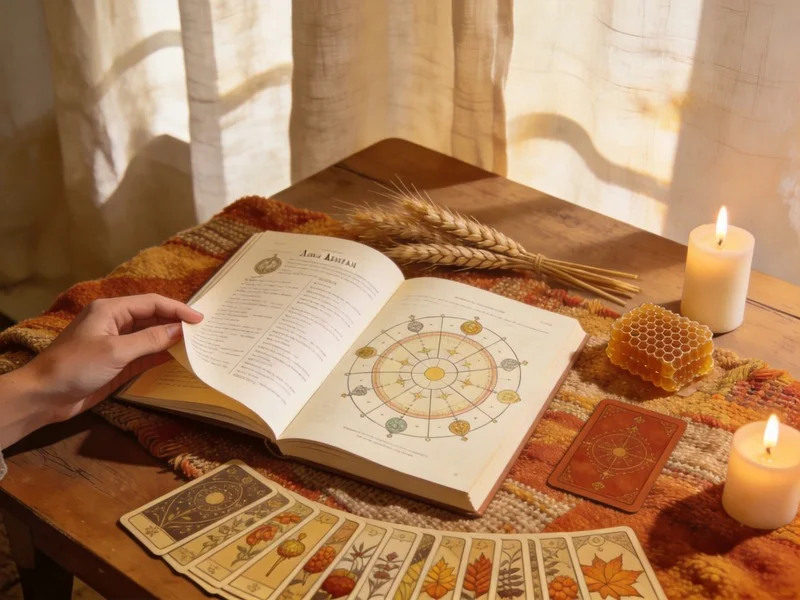
The Tarot Almanac: A Seasonal Guide to the Wheel of the Year caught my eye. It's structured around the sabbats — which brings me back to Lammas and harvest and the turning of the year. This is the book equivalent of a harvest spell: each chapter gives you spreads and practices tied to the season you're actually in. Before you say "I don't follow the Wheel of the Year," hear me out. Even if you're not a practicing anything, there's value to orienting your readings around the actual season you're living in.
The energy of January is different from July. This isn't woo-woo. It's just reality. No one does New Year's resolution readings in the middle of the abundance of summer, and no one does Lammas abundance readings in the gray of late winter. Tarot for beginners has enough to solve without ignoring the season.
There's also a companion kit for the Hollow Valley deck — a set of spreads specifically designed around weather and atmosphere. Cold light. Fog over a field. The quiet before snow. I almost skipped this section, but then I flipped to the sample spread they show in the catalog, and it worked so well with the deck's aesthetics.
Here's what I'll say about tarot bags: they're not optional, they're protection. Not in the magical sense — well, yes, in the magical sense too. But I mean physically. A deck without a bag is a deck with bent corners and dog-eared edges and a Two of Cups that's permanently greasy from the person who kept touching it during a reading. Get a bag. Llewellyn's offering some nice ones this year, but do not pay fifty dollars for a piece of cloth. That's insane. Buy a drawstring pouch from etsy and move on with your life.
The themed kits are worth looking at. The "Kitchen Witchery Tarot Kit" includes a deck, a guidebook, a spread cloth, and — I'm not kidding — a set of herb-infused candle votives. As a product, it's a little gimmicky. As a gift, it's perfect. The person in your life who's just getting into tarot and also loves cooking will lose their mind.
There's a reason these add-ons are overlooked. The decks are the shiny things. The books are the desk lamp, the candles are the desk, the pens are the paper clips. But here's the thing: a desk lamp is still useful even when you have the whole sun. Actually, get the companion book. Even if you don't have the matching deck. A well-designed book of spreads will work with whatever deck you already own.
Why Llewellyn's Catalog Sets the Tone for the Tarot Industry
I've been reading tarot for years. I remember the dark days when every deck was either a clone of the Waite-Smith or a weird collector's item that cost four hundred dollars and came in a box that required a museum curator to open.
Llewellyn has always been the working reader's publisher. They're not the most avant-garde, not the most mystical, but they're the ones who actually sell decks that survive regular use. And because of that, they set the agenda. When Llewellyn decides that inclusive imagery is the norm, every other publisher follows. When Llewellyn jumps on a trend — like the current one toward minimalist aesthetics — you can bet the indie deck makers on etsy will be doing it two years later.
The cycle is predictable. A small artist releases something groundbreaking. It gets noticed. Llewellyn picks it up and gives it a proper release — good card stock, a real guidebook, distribution to actual stores. Then everyone else copies the style. The artist gets paid, which is great. The industry moves forward, which is also great. But it means the catalog is not just a catalog. It's a statement of where tarot is going.
There's a particular kind of energy you feel when you flip through a new catalog and see your own path reflected back at you. The first edition of the Llewellyn catalog came out ages ago, back when I was still renting a room and reading cards on the floor because I didn't have a table. I didn't think I needed published decks. I had my sacred, worn Waite-Smith deck that I was sure was the only one I'd ever need.
I was wrong. Not about the Waite-Smith — I still have it, still use it on Sundays. But the catalog taught me that tarot could be alive. It could change. It could adapt to the people who actually used it.
What I love about Llewellyn tarot catalog highlights is the way they treat tarot as a living tradition. Some people act like the only "valid" tarot is the one designed in 1909. I think that's a convenience that comes from not having to question your own practice. But if you're a reader, you know the cards change meaning with every deck you handle. The same card can look stupid or profound depending on the context. A deck that's got a different face can show you a different truth about the same question.
That's why I care about the 2026 catalog this much. It's a mirror. You look at it and you say: this is the future of tarot. And then you pick your deck.
I do think it's worth owning at least one Llewellyn deck. If you're new to this, I'd start with the tarot for beginners guide on this site and pick up a Llewellyn deck that calls to you. The guide will walk you through the basics, but the deck you choose is where the actual work begins.
And if you're wondering about the relationship between tarot and astrology, there's a decent section in the catalog about it — a couple of decks that integrate astrological correspondences. That's a rabbit hole worth falling into. The astrological connection is one of the most neglected aspects of tarot study, honestly.
I'm not going to tell you exactly which deck to buy. That's between you and the catalog. But I'll say this: pay attention to what draws you in. There's a reason some decks call to you and others don't.
The Llewellyn 2026/2027 catalogs aren't just a list of products. They're a doorway. And you're the one who gets to walk through it.
Anyway. I have "Tarot of the Sacred Spiral" sitting in my cart right now, and I keep coming back to the screenshot of that Moon card. There's something about the half-light, the way the shadows pool under the trees. I want to read it at midnight, alone, with no clients, no deadlines, no questions. Just me and the cards. I want to feel that shift in the air, the one that happens when you're thinking about yourself and then suddenly you're not. You're the reader and the card and the question all at once.
That's what I want. And it's in the catalog.
I'll see you at the pre-order window.
Frequently Asked Questions
When does Llewellyn release their new tarot catalog for 2026?
It just dropped — late 2025. The catalog typically comes out a year ahead of the cycle, so the 2026/2027 edition is available now and shows what's coming over the next 18 months.
What are the most anticipated decks in the Llewellyn 2026 catalog?
From what I've seen, the Tarot of the Sacred Spiral and the Hollow Valley Tarot are getting the most buzz. There's also a Copper Garden Tarot that's generating huge waiting lists, and a teaser for a 2027 deck that's already had people going feral — and we don't even know its name yet.
How do I pre-order decks from the Llewellyn catalog?
Watch the Llewellyn website for pre-order dates, or get on the list at your local independent bookstore or metaphysical shop. Pre-order windows open about six months before release. Some decks sell out fast — the collector's edition of the Sacred Spiral was gone in under twenty minutes.
Are Llewellyn tarot decks good quality?
They've gotten much better than they used to be. The newer decks use heavier card stock and have proper linen finishes. But it's not uniform across all decks, so check the specifications listed in the catalog before you pay for a pre-order. And definitely read the details if you're buying a special edition.
What's the difference between Llewellyn's seasonal catalogs and their main catalog?
The main catalog covers the whole next year's releases. The seasonal catalogs are smaller and focused on restocks, companion books, and items that didn't make the main cut. The seasonal ones are worth reading if you're looking for specific accessories or a guidebook for the deck you already own.