Llewellyn’s 2026 Tarot Catalog Dropped—Here’s What I’m Actually Reaching For

Last Wednesday, just as the light was leaving the kitchen—the kind of grey October dusk that makes you forget what time it is—I saw a padded envelope wedged against the storm door. No fanfare. Just a thick little brick of paper waiting for me. I’d almost forgotten the Llewellyn 2026 tarot catalog was due to drop this month, but there it was, the familiar logo grinning up at me, promising at least an hour of slow browsing with a mug of something warm.
I didn’t tear it open immediately. I actually made tea first. That’s the sort of relationship I have with these catalogs now. Not frantic anticipation, more like the quiet pleasure of a letter from a friend who always has the best book recommendations. I’ve been reading tarot for over twenty years, and the Llewellyn catalog was my first window into the broader deck world. Before Instagram feeds and YouTube unboxings, this was how you discovered what was next. The thrill hasn’t vanished, just mellowed. And this year’s edition, the 2026/2027 lineup, got me thinking more than I expected.
First Look: Why This Catalog Still Matters (Even in a Digital World)
There’s something a little perverse about geeking out over a paper catalog in 2025. I know. But after a full day of screen fatigue, the matte texture of the pages and the faint smell of soy ink hit differently. The Llewellyn tarot catalog pre-order pages still trigger that childhood toy-catalog reflex—circling things you desperately wanted. Only now I’m circling the “Pre-Order” button online instead of filling out a mail-order form.
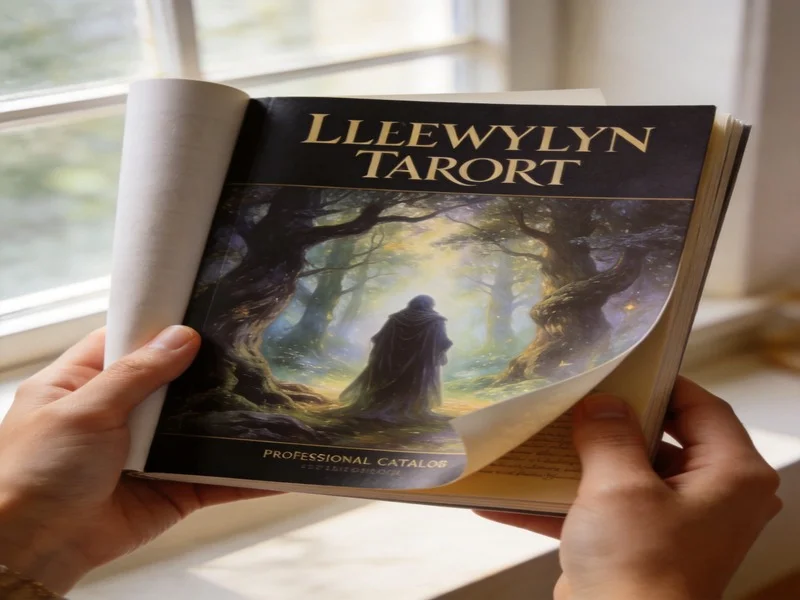
This year’s catalog cover art stopped me. The artist (if you’re curious about the Llewellyn tarot catalog cover artist 2026, it’s a painter named Elowen Mirelle, who I only knew from a few indie oracle decks) rendered The Star as a woman wading through wild asters, not a celestial goddess but a tired, luminous human. It set the tone: grounded, imperfect, a little bit tired of polished perfection. I think that’s where the whole industry seems to be heading.
But here’s the thing: a catalog drop isn’t just a product launch. It’s a pulse check on the tarot community’s imagination. I paged through with a pencil, noting which decks made me stop, which ones I wanted to show my students, and which ones I’d buy just to have something beautiful to shuffle. And I didn’t expect to feel so much relief.
The Decks That Made Me Text a Friend (New Tarot Decks 2026 Releases)
Around page 12, I came across a deck called The Liminal Woods Tarot. The art isn’t what you’d call traditionally beautiful—it’s done in murky watercolors and ink, figures half-hidden in undergrowth, faces obscured. The Strength card is a woman sitting with a wounded fox, not wrestling a lion. I immediately snapped a photo with my phone and texted it to my friend Claire (the one who always asks me to pull cards for her dating life). Her reply: “Finally a deck for people who don’t want to roar through life.”

That’s the vibe of many new tarot decks 2026 releases I’m seeing. There’s less “look at my power” and more “here’s how I survive.” Another standout, The Grief Seed Oracle (technically an oracle, but grouped in the tarot section) is built around the seasons of loss, with cards like Compost and The First Shoot. It’s not a deck you buy for fun; it’s a deck you hope you never need, but you’re glad it exists. I’ll be honest, I teared up a little reading the guidebook sample. It’s that good.
For those who want something that still winks at Rider-Waite-Smith tradition but feels utterly now, there’s The Patchwork Tarot. The designer, an indie artist who used to run a small Etsy shop—one of several independent tarot creators Llewellyn 2026 lineup has pulled into the mainstream—created each card using layered fabric scraps, photographed against a corkboard. The Major Arcana alone made me want to relearn the Fool’s Journey just to see it through her eyes. The Four of Swords is a quilt folded on a rocking chair. It’s exactly as comforting as it sounds.
I noticed something while flipping through: almost none of these decks are trying to be the “next beginner deck.” They assume you already know what a three-card spread is. And honestly? That’s a conversation the tarot world has needed to have for a while.
Why 2026 Feels Different: A Shift Toward Actual Depth
If I’m picking a best Llewellyn decks 2026 preview moment, it’s not one deck—it’s the collective sigh of relief I felt when I realized this catalog isn’t drowning in starter kits. Sure, there’s still the obligatory Tarot for Beginners reprint, and I’ll always point new readers toward a solid tarot for beginners resource. But the bulk of the lineup assumes you’ve been at this a bit. You’ve already worked through your first shadow work journal. You maybe even know what reversed tarot meanings feel like in your bones, not just from a cheat sheet. (Though, if you don’t, here’s a complete tarot card guide I trust.)

There’s a deck called Underbelly Tarot that’s fully devoted to inverted cards. Every single image depicts the reversed interpretation of the card, with the upright meaning presented as a mirror in the guidebook. It’s bold, and it’s going to ruffle feathers. I love it. I also predict a dozen “But reversed cards aren’t inherently negative!” debates on social media, and honestly, bring them on.
Another major shift: the guidebooks are getting serious. One deck, The Borderlands Tarot, includes a trauma-informed guidebook written by a licensed therapist who also reads tarot. There’s a section on using the cards with clients who’ve experienced PTSD, with gentle warnings and suggested spreads. This isn’t a deck for quick-fix love predictions. It’s a tool for long-term dialogue with the self, which I think is where tarot is at its most powerful anyway.
Okay, but here’s a pure conversational aside, because the catalog made me reflective:
I remember buying my first deck, the classic yellow-box RWS, from a New Age store that smelled like patchouli and dust. I learned from the Little White Book and a library copy of Mary Greer’s work. Back then, the idea of trauma-informed tarot guidebooks, or decks designed specifically for shadow work, would have seemed absurdly niche. Now they’re the heart of a major publisher’s lineup. It’s like watching an old friend grow up and become a therapist—still the same person, but suddenly able to hold your hardest questions without flinching. I’m not sure if I’m proud or just emotional. Maybe both.
Pre-Ordering Without the Panic: Yes, It’s Safe
One thing the catalog sparked in me, and in the group chats I’m in: pre-order anxiety. Several of these decks are labeled “limited initial print run,” which is a phrase that tends to make us tarot folks twitchy. I’ve lost count of how many times I’ve seen someone frantically asking where to pre-order Llewellyn 2026 tarot catalog decks, worried they’ll miss out.

I’ll give you the same advice I gave my sister last week when she texted me a screenshot of a deck she wanted: take a breath. Unlike some indie Kickstarter campaigns with genuinely tiny runs, Llewellyn knows how to gauge demand. Even the limited edition Llewellyn tarot decks 2026 are rarely gone-in-a-week limited. The pre-order window is usually generous, and most decks will get a wider release if the interest is there. I have a personal rule: If I’m still thinking about a deck three days after I close the catalog, I pre-order. If I forget about it, I let it go. That rule has saved me from dozens of impulse purchases that would’ve sat unopened on the shelf.
And if you’re curious about what new tarot decks is Llewellyn releasing in 2026 and want the full list before you decide, the digital version of the catalog on their website has all the specs, release dates, and pricing. You can also pre-order through your local indie bookstore, which often gets small allocations ahead of street date. I did that with The Patchwork Tarot and my shop threw in a free fabric swatch bookmark. No online megastore would do that.
Here’s another thing: if you’re investing in a deck that might stretch your budget, ask yourself one question: “Will I actually use this, or do I just like looking at it?” It’s okay to love the art—I own decks purely for aesthetic meditation—but be honest about your intentions. A $40 deck you never shuffle is just expensive wall art. (Then again, I have a lot of expensive wall art. So maybe I’m not the best to judge.)
Beyond the Cards: Oracle Decks and Hybrids That Almost Stole the Show
Tarot purists might skip the oracle section, but I think you’d be mistaken. The upcoming Llewellyn tarot and oracle decks segment of the catalog is where things get truly experimental. I found a Lenormand deck blended with botanical illustrations called Flora Lenormand, which I didn’t know I needed until I saw the Clover card as an actual patch of clover, with the stem curling into the number 2. It’s so darn pretty I might finally learn Lenormand properly.

Then there’s The Almanac Oracle, a deck keyed to the Wheel of the Year. It has cards for each sabbat, including Lammas, harvest, and abundance motifs woven into almost every suit. If you already work with tarot and astrology, you’ll find the correspondences delightful—the guidebook cross-references planetary hours and moon phases. Speaking of which, if you’re looking to deepen that connection, I have a piece on tarot and astrology that might help. These kinds of companion tools are designed to layer onto your existing practice, not replace it. You could pull an Almanac card each morning alongside your daily tarot card and suddenly your reading feels like a conversation between the earth and your psyche.
I’m particularly taken with The Common Thread Oracle, a deck created by a collective of ten fiber artists from small communities. Each card features a knitted or embroidered piece that represents a concept like “Mending,” “Tangled,” or “Cast On.” It’s the sort of slow-making energy that makes me want to sit with a cup of tea and a problem that doesn’t need solving. And if you’re weary of hyper-digital tarot spreads for love or career, this deck invites a quieter kind of inquiry. (Though if you do need a spread for a relationship question, I’ve got some love tarot spreads that might help—just saying.)
What the Spring/Summer 2027 Catalog Might Hold
I spent an unreasonable amount of time at the back of the catalog, where Llewellyn teases the coming season. There’s no full list yet, but the hint lines are enough to get my imagination running. The word “reprint” appears a few times, which suggests some beloved out-of-print classics might return. I’m crossing my fingers for a certain 1990s art nouveau deck that I’m not going to name because I don’t want to jinx it.
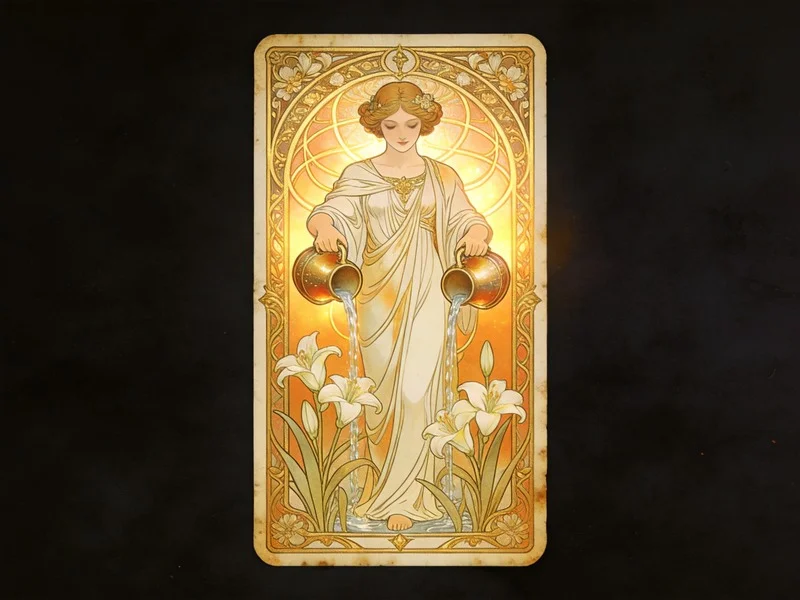
From the tarot publishing trends Llewellyn 2027 mentions, it looks like the slow-living influence is deepening. There’s talk of decks themed around kitchen witchery, ancestral healing, and even a deck that pairs with a gardening almanac. I expect flora and fauna to dominate, with a return to earthy, tactile aesthetics. The tarot catalog spring summer 2027 seems to lean into the seasonal rhythm, emphasizing growth cycles, harvest energy, and the quiet abundance of the land. I’m already imagining a deck filled with ripe tomatoes, root vegetables, and canning jars—and honestly, I’d buy it instantly.
Another thread: more partnerships between major illustrators and Llewellyn. The success of the 2026 lineup’s independent creator collaborations seems to have cracked the door wider for artists who might never have considered tarot before. That can only lead to stranger, more personal decks, which is exactly what keeps this practice alive.
But I’m getting ahead of myself. The 2027 catalog is still months away. For now, I’m content to sit with the 2026 offerings, letting a few of them speak to me before I click any pre-order buttons.
And if I find myself at the same kitchen table next autumn, flipping through next season’s catalog with the light fading earlier than I expect, I’ll probably have just as many opinions. Maybe I’ll even start a fight with Claire over which deck captures the Chariot best. (She’s still obsessed with that bicycle, and maybe I’m coming around to it.)
I’ll let you know.
Frequently Asked Questions
When does the Llewellyn 2026 tarot catalog come out?
It usually drops in late autumn, with pre-orders opening for early 2026 releases. The exact date varies, so keep an eye on Llewellyn’s website.
Can I pre-order limited edition decks from the catalog?
Yes, and I’d recommend it if you really want a deck. But don’t panic—most limited editions are printed in enough quantity to satisfy early demand. My rule: if you’re still thinking about it three days later, place the order.
What are the most anticipated new tarot decks in the 2026 catalog?
The *Liminal Woods Tarot*, *The Patchwork Tarot*, and *Underbelly Tarot* are generating a lot of chatter for their unique approaches to shadow work and everyday magic.