Ace of Swords meaning: the truth that cuts through the noise

I've pulled the Ace of Swords for myself on days when I really didn't want to see what it was showing me. That's the thing about this card—it arrives with a glint of steel and a demand: look closer. Stop pretending. Say the thing.
It's not the warmest card in the deck. It isn't the Two of Cups with its soft gazes and shared cups, or the Star with its gentle healing waters. The Ace of Swords is the friend who sits you down, hands you a coffee, and tells you your boyfriend is gaslighting you. You don't thank her right away. But later, you do.
So let's talk about what this card actually means—not the keyword list from the little white book, but the real, messy, sometimes awkward truth.
The Sword That Cuts Through Confusion
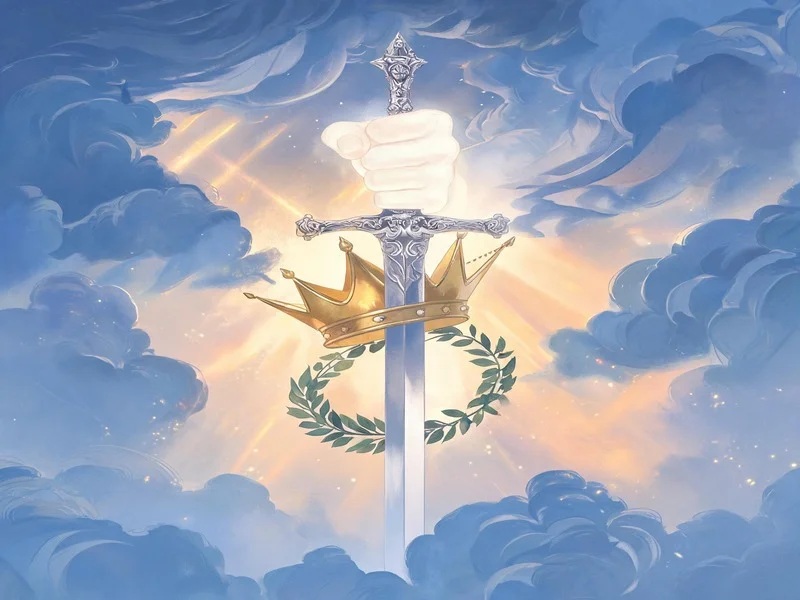
Picture the card. A single hand emerges from a cloud, holding a sword upright. The blade points to the sky, piercing a small gold crown. There's a ring of laurel leaves. Maybe a few olive branches. It looks triumphant, sure, but there's also something sharp about it. Something that doesn't blink.
I read for a woman last Tuesday—late afternoon, the kitchen light flickering, her hands wrapped around a mug that said "PLANT MORE VEGGIES," which I took as a sign. She asked about a job offer she'd received. Good salary, nice title, but something felt off. She wanted me to tell her it was the universe's green light.
The Ace of Swords came out. And I looked at her and said, "What do you actually know that you're not letting yourself know?"
She was quiet for a long time. Then: "They ghosted two of my interview emails."
The sword cuts through confusion. It doesn't decorate it.
The Blade, The Crown, The Clouds: Ace of Swords Symbolism
Let's break down the visual language, because the Ace of Swords symbolism is some of the richest in the deck. Nothing here is accidental.
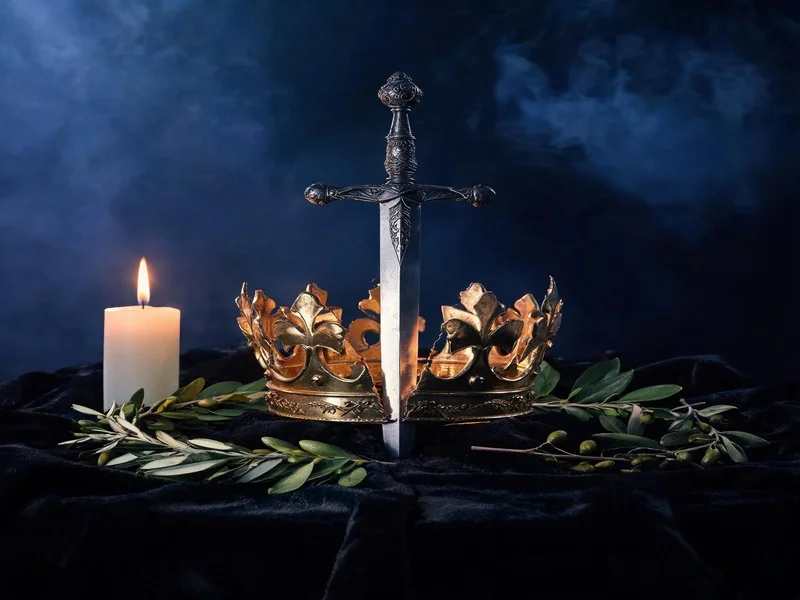
The crown represents authority, victory, and clear-headed leadership. But it's not sitting safe on a head—it's being pierced by the blade. That's a bold statement. It says that truth and reason will always break through pretense. The crown can be clever, it can stamp its feet and demand respect, but a clear mind sees right through it.
Interesting (and I know I'm not supposed to say that word, but it fits): in the Marseille tradition, the crown is sometimes detached, floating above the sword. The message is even stingier—there's a difference between authority and truth, and you'd better know which one you're worshipping.
The clouds are the fog of confusion, the mental static. The hand comes out of the cloud, not above it. The sword doesn't descend from heaven on a beam of divine light; it emerges from the mess, because clarity isn't about escaping the fog. It's about cutting through it.
That's the card's deepest message. You don't need more information. You need the courage to use what you already know.
I have an opinion about this: the Ace of Swords is the most underrated card in the deck. The Death card gets all the dramatic credit. The Fool gets the whimsy. But the Ace of Swords? It's the one that ends arguments, starts movements, and tells the truth at funerals. It's the reason the Hanged Man gets off the tree. It's the "oh, right, I can just choose" card.
And because I know we're friends here, let me say something that might sound a little woo, but in the most practical way possible: the Ace of Swords is also the card of Lammas. The harvest. That moment when you finally see what you've grown—good, bad, and ugly—and you get to decide what to keep.
A sword isn't a shovel, though. It doesn't dig. It reaps.
Maybe that's why this card feels so seasonal to me. In early August, the world starts to tilt toward harvest. The mornings get a little quieter. The garden gets demanding. The Ace of Swords cuts the first stalk and says, "Here. This is what your labor made. Look at it."
And you either do that—really look—or you pretend not to hear.
When the Sword Cuts Clean: Ace of Swords Upright Meaning
The Ace of Swords upright meaning is centered on a mental breakthrough. Clarity. A new idea that arrives like a thunderclap and refuses to be ignored. Communication that's direct, honest, and maybe a little too sharp for comfort.

I'll be honest: this card makes people uncomfortable. Because it's not just about having a thought; it's about acting on it. And action is where we all get tangled up.
You know that moment when you're in a conversation and someone says something that's technically true but delivered like a paper cut? That's the Ace of Swords in its shadow form. But in its upright, healthy form, it's the surgical precision of truth. You say what needs said. Not to hurt, but because the silence is the actual wound.
Ace of Swords as action and clarity is the long-tail phrase I keep circling, because clarity and action aren't two separate things. They're the same movement. Clarity happens in the moment you open your mouth and commit to what you've been rehearsing for three days.
The card asks: what are you delaying until you're "sure"? Because you'll never be sure. The sword doesn't wait for certainty. It makes its own.
The crown is pierced. That's the deal.
Ace of Swords Reversed: When the Edge Gets Blunted
Here's where I might lose some purists. The Ace of Swords reversed meaning is usually described as mental fog, miscommunication, blocked ideas, and sharp words. And sure, that's there. But I think reversed Swords Aces aren't always "bad." Sometimes they're just... patient.

I read for a man last spring, a young guy with a shoulder tattoo of a moth and a voice that was almost a whisper. He asked what he needed to hear. Not what he wanted—what he needed. The Ace of Swords came up reversed. I think he was hoping for The Sun.
Instead I said, "You're not ready to say it yet. And that's okay."
The Ace of Swords reversed blocked communication isn't always a punishment. It can be a gateway. A warning that if you speak now, before you've sharpened your thought, you'll just be making noise. And noise isn't the same as truth.
That's actually the card's way of checking your integrity. Who are you being in relation to the truth? If you're being crafty, manipulative, or just plain scared—the sword gets heavy. It drags.
The classic Ace of Swords reversed meaning often includes:
- Confusion and muddled thinking
- Misunderstandings that take on a life of their own
- Harsh words that slice without purpose
- An idea that's not fully formed yet
But I'd also add: the need to sharpen your tools. A blunt sword doesn't mean you're broken. It means you're resting. You're being asked to spend more time with the thought before you release it into the world.
Does that mean sometimes reversed Ace of Swords is just a bad sign? Yes. It can be a heads-up that someone is bullying you with "facts" that aren't actually true. It can be the office contrarian who mistakes cruelty for honesty. And it can also be your own inner critic, wearing Truth's robe, lying directly into your ear.
Know the difference. Practice. That's what the reversed card is coaching you toward.
Love, Career, and the Ace of Swords: Where the Blade Meets the Road
Now let's get to the practical stuff. Ace of Swords love and career.

In relationships, this card often shows up during a breakthrough conversation. The one where you finally stop saying "we're fine" and actually name the thing that isn't fine. It's not romantic in the traditional sense. There's no candlelight, no roses. There might be tears. But there's also honesty, and in the long run, honesty is sexier than roses.
If you're single, the Ace of Swords can mean meeting someone who treats your mind as an erogenous zone. The one who listens to your half-formed theory about why everyone should have a designated cry spot and then gives it a name. The connection starts in the throat, not the heart.
The Ace of Swords tarot meaning in relationships is honesty—and boundaries. It's the card that says "you can love someone and still refuse to be treated like a doormat." The sword makes space. She is the boundary. This card will also ask you to end a cycle of overthinking in love. You've been re-reading his texts for five hours. The sword swings. You delete the app.
For Ace of Swords meaning for career and decisions: this is the card of the decisive moment. The one where you either speak up in the meeting or watch someone else take credit for your idea. The Ace of Swords says speak up. Not aggressively, not to bulldoze, but because your voice is the tool you've been given, and burying it is a kind of theft.
I saw this card come out for a single mother who worked in logistics. She was terrified of a performance review. The card told her to write down her wins, not as a brag, but as a matter of record. She did. She got the raise.
It's not magic. It's the sword.
If you're looking at a decision, the Ace of Swords yes or no meaning is almost always yes—provided the question is framed honestly. The yes of a blade is not the same as the yes of a heart. It's an unequivocal, cutting yes. If the question is "Should I confront this?" It's yes. "Should I start this project?" It's yes. "Should I say this out loud?" It's yes.
But it's also a "yes, and you know it."
If you're wringing your hands, the Ace of Swords cuts through the hand-wringing. It says: act. Decide. Even a wrong answer is better than an unanswered question.
The Spiritual Sharpening: Working With the Ace of Swords
The Ace of Swords spiritual meaning and new ideas goes beyond the mundane. It's the sword of discernment. It's the tool that separates the voice of fear from the voice of truth.

So how do you work with it?
Try this: when the card appears, take out a journal. Put the card in front of you. Look at the blade, the crown, the clouds. Ask yourself these questions:
- What have I been avoiding saying because I'm afraid of the consequences?
- What's true about my situation that I've been pretending isn't?
- What would I do if I stopped needing everyone to approve?
Don't answer them with your head. Answer with your hand. Write without censoring. The sword is honesty, and that includes honesty with yourself.
I also love a practice I call "the piercing"—you take an actual sword... no, please don't take an actual sword. You take a pen. You write down the lie you've been telling yourself, the one that's holding you back. Then you cross it out so hard the pen leaves grooves in the paper. That's the piercing.
It sounds childish. It works.
The Ace of Swords is a card of harvest, of Lammas—when you reap what you've sown, and you finally get to see if you planted good seeds or weeds. It's not always pretty. But there's a kind of abundance in that clarity. A wealth of honesty. A harvest of light.
If you're looking to pair the Ace of Swords with other cards, check out the complete tarot card guide to see how it speaks to the suit of cups (emotions), wands (passion), and pentacles (money). And if you're specifically curious about relationships, the tarot spreads for love at athink.app have a few positions designed to cut through romantic fog. You can also look at the major arcana meanings to understand the cards that come before and after it in a reading.
But if I were you, I'd start by just sitting with the card. In your hand. Under your pillow. In your line of sight while you work. Let the sword do its thing. Give it space to speak.
A Last Word on the Ace of Swords Meaning
The Ace of Swords tarot card meaning isn't always comfortable. It's the card that ends relationships that need ending, starts businesses that need starting, and tells you the truth you've been dodging.
But it's also the card of your mind at its best—sharp, clear, and free.
I think about the woman with the PLANT MORE VEGGIES mug. She didn't take the job. She stayed in the quieter role, finished her greenhouse, and started selling seedlings at the farmers market. I saw her last month, and she was sunburned and happy. She said, "I didn't get the job. I built the life."
The sword cuts. But what grows after? That part is up to you.
So here's what the Ace of Swords means for you, whoever you are, wherever you're standing:
You already know. And you already have what it takes to say it, do it, or walk away from it.
Frequently Asked Questions
What does the Ace of Swords mean in a tarot reading?
It's the card of mental breakthrough, clarity, and truth. Think of it as a flash of insight or a moment when you finally see a situation for what it is. It often shows up when you need to make a decision or say something difficult. It's not gentle, but it's honest.
Is the Ace of Swords a yes or no card?
In yes/no readings, the Ace of Swords leans strongly toward yes—if your question is about acting, deciding, or speaking the truth. It's a clear, decisive energy. But it's also asking you to commit to the truth once you know it. Don't ask if you don't want an honest answer.
What does the Ace of Swords reversed mean in relationships?
Reversed, it usually points to blocked communication—things you're not saying, or things being said with too much sharpness. It can mean you're holding back because you're scared of the conflict, or that you're arguing just to win instead of to be heard. It's not doom; it's a prompt to soften your approach and find the real words.
How does the Ace of Swords relate to work and career?
In career contexts, it's the card of the bold idea, the strategic plan, or the moment you finally speak up in a meeting. It's about using your mind to solve problems, but also about being willing to take decisive action. If it shows up, you're being asked to stop hesitating and step into your authority.
What is the spiritual meaning of the Ace of Swords?
Spiritually, it's the sword of discernment—the tool that helps you separate the voice of fear from the voice of truth. It's about seeing reality without the veils of illusion. It can also connect to harvest energy, like Lammas, when you reap what you've sown and finally see your life clearly.